The Meme as Masterpiece: Seedance 2.5 vs Kling O3 vs Wan 3.0
Why we should judge AI video models the way we judge Donatello and Michelangelo.
 Tony Assi7 min read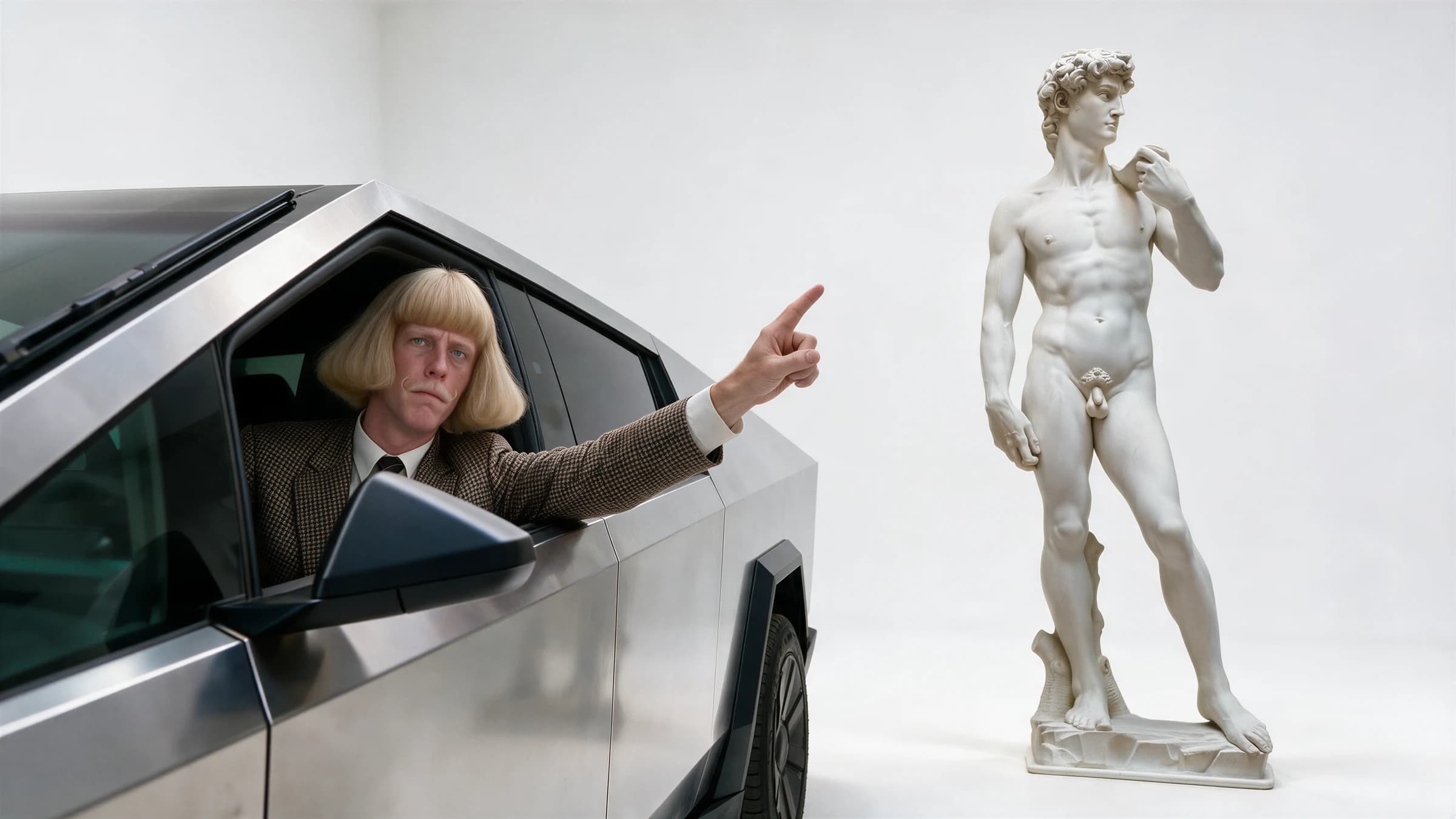
Nobody asks whether Michelangelo's David is better than Donatello's. One is marble, one is bronze. We ask what each one does.
AI video deserves the same question. I gave Seedance, Kling and Wan the same prompt, the same four images and the same ten seconds of bullet time.
Seedance carved it. Kling cast it. Wan painted it. Three different works from one template. The prices, the speeds and the full prompt are below.
Six Davids
The story is simple: a shepherd boy with a sling beats a giant. Artists have retold it for six hundred years, each in their own moment and material. Donatello made two, in marble and in bronze. Verrocchio cast one. Michelangelo carved the one everyone knows. Bernini caught him mid-throw. Caravaggio painted him holding Goliath's head.
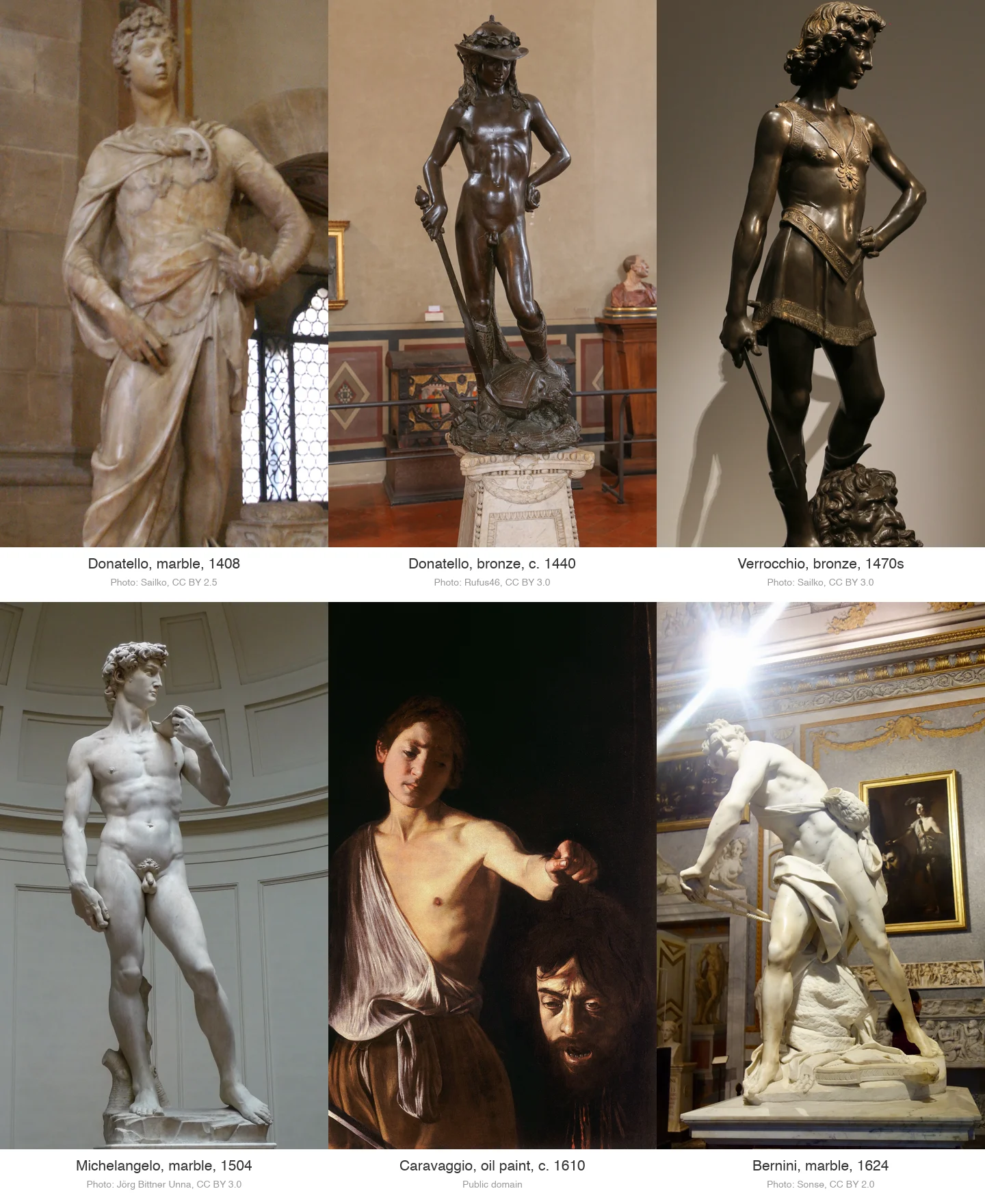
Nobody calls the later ones copies. Each one changed two things: the hand that made it and the material it was made in. Even Michelangelo's has been remade: the David in Florence's main square has been a copy since 1910.
The masterpiece was never the original. It's the template, remade by everyone who picks it up. That's also the best description of a meme I know. Today the meme is the template, the creator is the artist, and the model is the medium.
The Material: Bullet Time
Bullet time is a template too. In 1998, a Gap khaki ad froze swing dancers in midair while the view swung around them. Fashion got there first.
A year later, The Matrix made it famous with a rig of about 120 cameras and a Hollywood budget. For decades, the shot belonged to whoever could afford the cameras.
This year it became a meme. Someone gets bumped on the street, everything they're holding hangs in the air, and the camera flies through it. Thousands of versions, one template.
Mine is one more remix. A woman walks a New York subway platform on the phone. A commuter brushes her shoulder, time stops, and the camera moves past her floating sunglasses, her smoothie and her flip phone. I made her and the props in FASHN, put our logo on each prop, and gave every model the same four images and the same prompt.
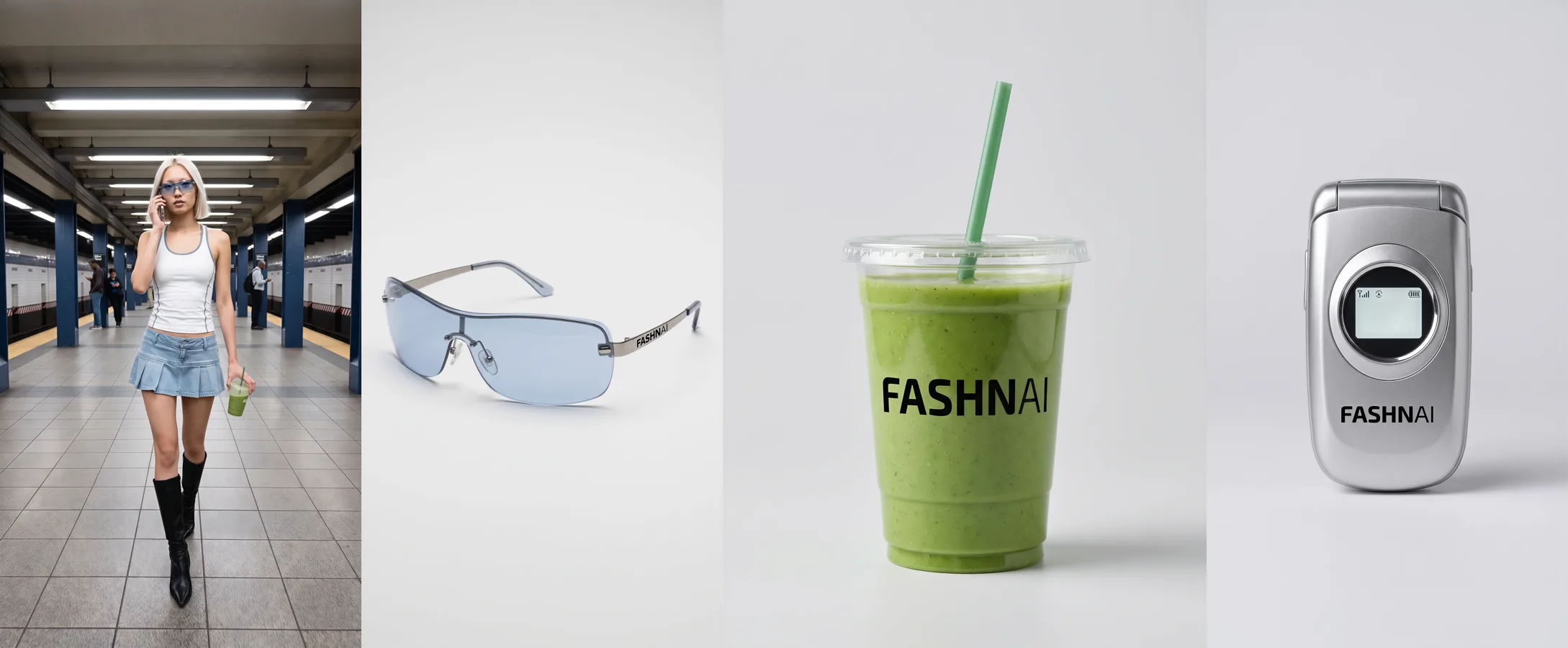
Here's the prompt. Kling and Wan got the same words, rewritten in each model's own format:
The prompt
One continuous 10-second shot on a New York subway platform with a grey tiled floor, tiled walls and dark blue steel columns, flat fluorescent light. It opens low on the tiled floor on her black stiletto knee boots walking toward the camera, then the handheld camera tilts up to reveal the woman from Image 1, with her platinum bob, white racerback tank, pleated denim micro mini and black knee boots, walking toward the camera at natural speed while it moves backward at her pace. She holds only the silver flip phone from Image 4 to her ear, the green smoothie from Image 3 in her other hand, and wears the blue wraparound sunglasses from Image 2. She says into the flip phone, in a casual, confident voice: {Trust me, nobody can tell it's AI.} Right after her last word, at the fourth second, a passing commuter bumps her shoulder and time drops into extreme slow motion. The sunglasses lift off her face, the flip phone and the smoothie leave her hands and hang in the air, a few green drops floating from the cup. While everything stays in extreme slow motion, the camera moves fast and smoothly: it pushes in past the floating sunglasses, sweeps around the smoothie cup, and ends close on the floating flip phone. The FASHN AI wordmark stays readable on the glasses, the cup and the phone, exactly as in Images 2, 3 and 4. Sound: subway ambience and <her heels clicking on tile> while she walks; at the bump <a hard thump with a deep sub bass drop>, then her voice and the station go quiet and muffled, a deep slow drone holds, and <a heavy whoosh> each time the camera passes an object. No subtitles, no other text, no other logos.
Carved in Seedance
Seedance 2.5 followed the whole shot list. It opened low on her boots and tilted up, gave her the line, landed the bump, then floated every object, moved in close on the cup and ended on the phone. It's the only model that let go of the props. It was also the fastest, at 99 seconds, and the most expensive, at 5.71 USD for ten seconds at 1080p.
It carved the scene the way the prompt described it, cut by cut. The flaw: from about seven seconds she's still holding a phone while a second one floats past.
Cast in Kling
Kling O3 kept everything where it started. The opening was right, the commuter passed close and the glasses lifted off, but she never let go: the phone and the cup stayed in her hands through the close-ups, and it ended on them in her grip. A cast holds the shape of its mold. That's what makes Kling 3.0 good at bringing a single photo to life, and here it was the problem. It took 6.5 minutes and cost about 1.40 USD.
Painted in Wan
Wan 3.0 gave the sharpest picture and a wider, more open platform. The glasses lifted off her face and the phone floated, but the cup stayed in her hand. It polishes as it goes: it cleans up faces and adds light to them, like a painter working toward a finish. It took about 4.5 minutes and cost about 2.00 USD.
Side by Side
| Seedance 2.5 | Kling O3 | Wan 3.0 | |
|---|---|---|---|
| Time to render | 99 s | 6.5 min | 4.5 min |
| Price, 10 s at 1080p | 5.71 USD | about 1.40 USD | about 2.00 USD |
| Objects float | all three | glasses only | glasses and phone |
| Close-ups on the props | yes | in her hands | yes |
| Followed the brief | yes | no | partly |
Bullet time isn't the only test that splits them. I gave all three the same talking lines for a selfie video. Seedance's woman was almost shy. Kling's went over the top, with big hands and a wide mouth. Wan's was in between, but its sound came in loud.
The short version (tested October 2026):
- Seedance 2.5 is the best of the three. It followed the whole shot list and it's the fastest, but it costs the most.
- Kling 3.0 is good all round and the cheapest, with the most natural voices. Turn the acting down.
- Wan 3.0 has the sharpest, most polished picture, and it handles big, complex movement well. The sound is its weak spot: loud and flat, so plan to replace it.
Who Told You You Could Fish Here?
The second template has no author at all.
An old man in a pickup truck pulls up to two guys fishing at a pond. "Who told you you could fish here?" They say they thought it was state property. "Hit the road, dude. This ain't no state property. This is private property."
Someone filmed it on a phone. Within weeks it was everywhere, and nobody seems to know who posted it first. I looked. That's how folk tales work: no author, retold with changes, owned by everyone.
The remixes keep one thing: the soundtrack. A man in a blond bowl cut says it. Napoleon says it. Someone in a toy car says it. These three use the same audio, word for word. The picture is the part each hand changes.
So I made my own. I took the first frame of the clip and restyled the man in FASHN into a high-fashion woman with a white bob. Kling's video edit copied the original's motion exactly. A new voice from ElevenLabs, a lip sync, and she was the one telling them to hit the road. About six dollars.
The material barely mattered here. The motion was the old man's and the words were his. What made it a new work was the hand: who she is, how she says it.
And listen to what he's saying. "This ain't no state property. This is private property." For a century and a half, the moving image was private property. It belonged to whoever owned the cameras. Now it's state property.
The Poor Image, in High Definition
The artist Hito Steyerl wrote about this in 2009, before any of these models existed. In "In Defense of the Poor Image" she argued for the "poor image": the blurry, compressed copy that travels fast and far. Its value isn't resolution, it's circulation.
The fish clip is a poor image: a shaky phone video of a stranger. What's new is that AI remakes poor images as rich ones, and keeps them looking poor on purpose. Look at the bowl-cut remix below. Nobody filmed it, and it still looks like a phone pointed through a car window.
My selfie test went further. Nothing in it was ever filmed. It's a 1080p imitation of a phone video, down to the arm holding the camera. We're faking the poor image in high definition, because the poor image is the one people trust.
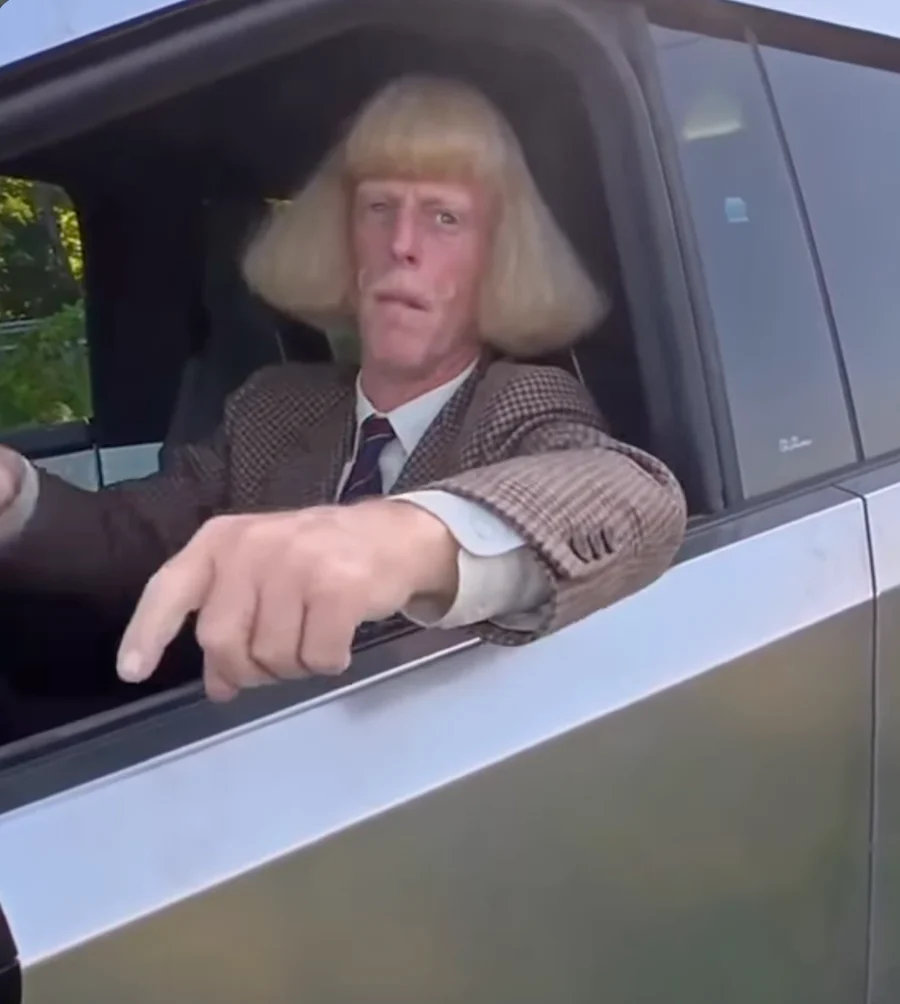
A frame from an AI remix of the fish meme. Made by a model, framed like a phone video.
Taste
In 2023, Steyerl wrote a sequel, "Mean Images." AI pictures are averages: the statistical middle of everything they were trained on. Mean as in average, and mean as in cruel.
That's the catch. Each of these models pulls toward the middle. Left alone, every bullet time looks like every other bullet time, and every fisherman sounds the same. The material has an opinion. The hand has to have a stronger one.
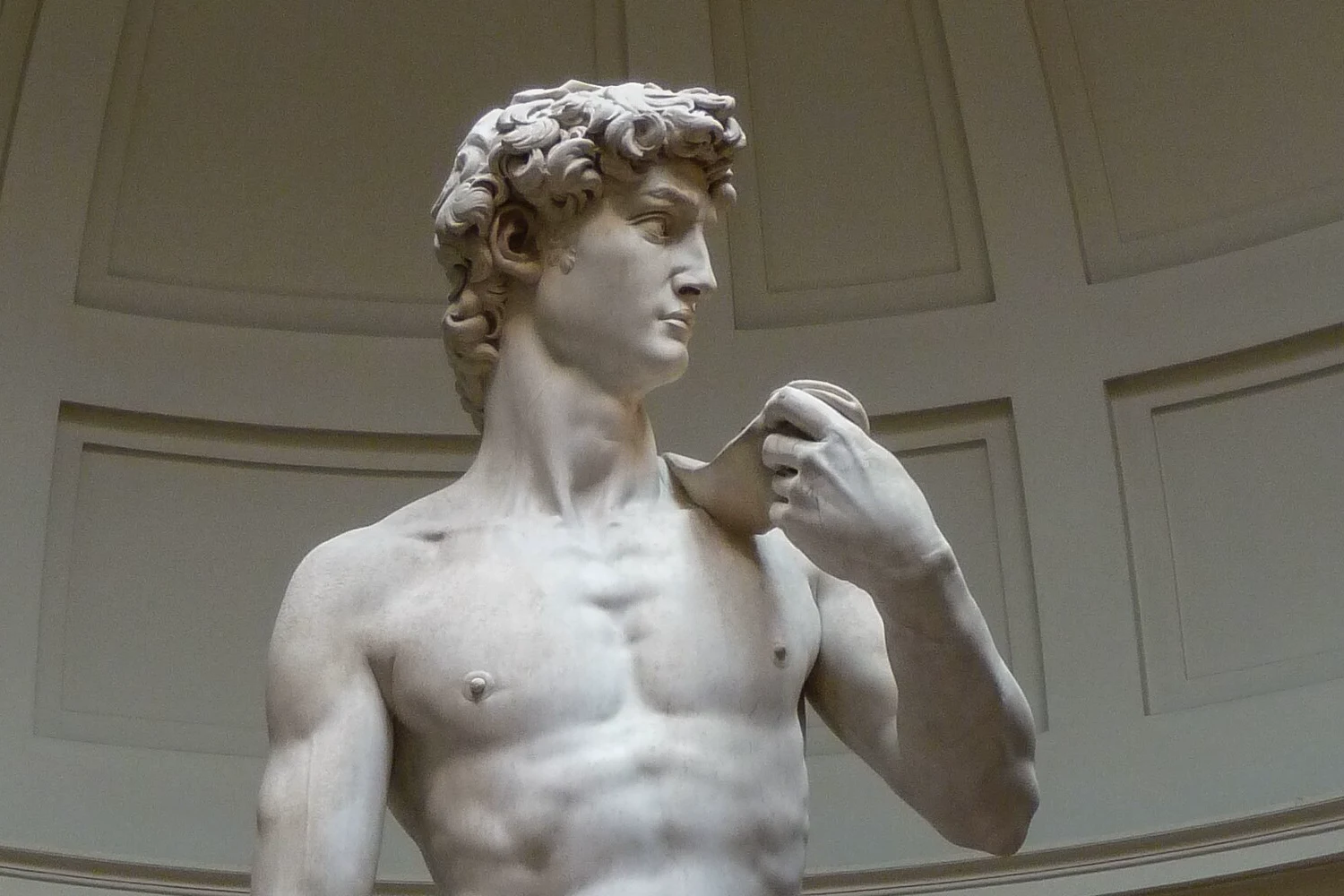
Michelangelo, David, 1504: the moment before the throw. Photo: Jörg Bittner Unna, CC BY 3.0.
Donatello didn't pick bronze by accident. Michelangelo didn't pick marble by accident. The choice of material was part of the work.
The same is true now. When anyone can remake anything, the craft moves from making to choosing: which template, which model, which take. Seedance for the choreography. Kling to hold the photo. Wan for the finish. And a reason to make it at all.
The masterpiece was never the original. It's the template, and what you do with it.
About the Author
Tony Assi is the Creative Engineer at FASHN. He holds an MFA in Digital Art and New Media, where his thesis was on fashion and AI, and he has worked as a photographer, a filmmaker and inside the fashion industry.

Written by
Tony Assi